Audio Analysis of the Kirk Assassination
Audio expert Matt Bowden analyzes the sound of the gun shot that killed Charlie Kirk.
CharlieKirkTruth.Blog
11/1/20255 min read
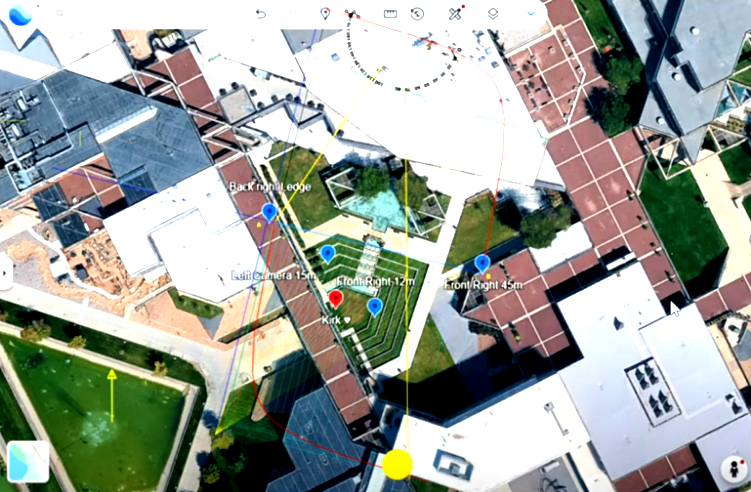
Reflection vs Source | TDoA Audio Geometry Explained

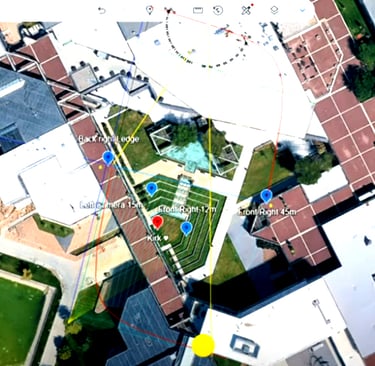
Matt Bowden analyzed the sound acoustics associated with the gunshot of September 10, 2025 in Orem, Utah.
Bowden used multiple audio sources to calculate that the shot came from up high and was coming from Charlie's right side.
Bowden's initial sound analysis produced a sound source origin represented by the yellow dot.

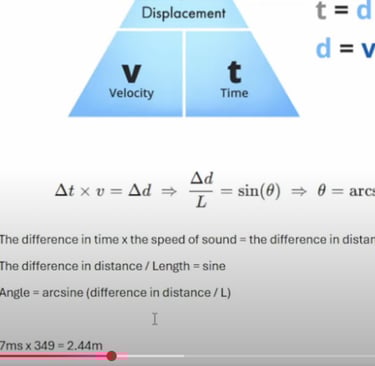

Stereo analysis | What a front camera heard and why it's important
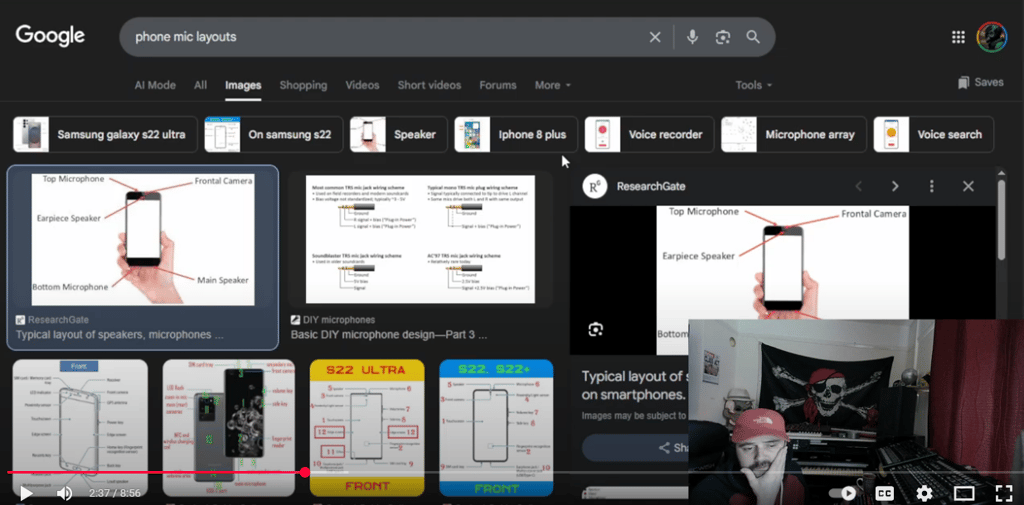

Can Audio Forensics Prove That Charlie Kirk Was Shot From Behind? with Special Guest Matthew Bowden
When using the "crack-to-bang" timings, which seems kind of tricky because it's dependent on the trajectory of the projectile, and to know that we have to know the location of the shooter which is what we're trying to find out.
To solve this 'chicken-and-egg' issue, the Monte Carlo method is used, which is a computer simulation that "guesses and checks" thousands of scenarios.
Instead of solving for the location directly, the algorithm "guesses" a possible shooter location on the map.
For each guess, it simulates the physics, drawing a trajectory and calculating the simulated 'crack-to-bang' delay the mic would have heard.
It then compares that simulated time to the actual time you measured from the recording.
If the times match, that "guess" is a "hit."
After running thousands of guesses from all over the map, it builds a 'heat map' showing the locations with the most hits.
This lets the audio data itself reveal the most probable trajectory and shooter location.
Keep up the great work!
TDoA Breakdown: Pinpointing the Source with Stereo Microphones

Effective, great idea.
Another data triage method is to use temporal echo location, and synchronize the "crack" waveform from every possible microphone location you have data from to the central-most aspect of the common "crack" waveforms you can.
Once you isolate that precise common moment on each of the videos, you can use the known microphone locations at that precise moment to draw larger equal radius circles until they all converge.
At that point you have a close enough idea of the bullet trajectory, that's where the pressure wave originated from central to those microphones, that's close enough to where the round went through according to our witnesses (cameras).
Then, precisely as possible count the time delay of the report "bang" from the waveform of each microphone perspective using that common observation starting "crack" to measure from, scale them all together using a reasonable round velocity (900 m/s, 5.56 NATO), and the temporal echo signature of the "boom" report will be found very near the intersection of those estimated temporal arcs.
Not dead on precise, but it narrows the window quickly.
If you run it again using 450 m/s common projectile velocities, and draw those smaller travel arcs to see if they even intersect, the source of the round can be narrowed down to a small field pretty quick once you see the pattern of those temporal arcs (which denote from each microphone how much farther away the report was from the crack based on the temporal delay variance across all the data samples) point closer to where they all agree the source was nearest.
This takes a lot of the echo noise from structures/windows/people/etc. out of the signal analysis, and narrows down the search window quicker by triaging a lot of data/signal processing for later.
Works great on submarines, bats, owls, and starships too, .
The assassin group KNEW they could NOT fire multiple rounds, as it would likely reveal the origin/location of the shooter.
The assassin group was most very likely concerned about the possibility that a missed shot would only wound Charlie, not kill him.
Further, the assassin group could not risk the shooter being recorded by one of hundreds of cellphone cameras and campus security cameras.
I absolutely believe the so-called Tyler Robinon shooter did NOT fire a gun at all.
Most witnesses report the shot sounding like a "firecracker."
If the assassin fired a 30.06, I'm telling you NO ONE, not one person would describe it as sounding like a firecracker. That's for damn sure.
And for those set of reasons I contend it likely that a remote firing system literally bluetoothed to Charlie's earpiece transmitter, would be the likely solution for such ZERO-FAIL mission requirements.
Again, if you consider the negative ramifications had the assassin group only wounded Charlie, the blowback would be immeasurable for the Jewish donors and Charlie's Jewish "friends" whom Charlie accused of threatening to kill him prior to his assassination.
Had Charlie lived, there is little doubt that Charlie would have believed he was shot by his detractors who kept scaring him prior to his assassination.
I'm sure the assassin group was painfully aware of this happening IF Charlie did not die from the lone, single shot.
I contend the assassination group need for absolute certainty in killing Charlie with one single shot, as to not leave such a single shot to human hands and all the funky variables that can occur when a human attempts to operate a gun in a highly, highly visible environment.
Acoustic, or "sound," cameras are not true cameras in the traditional sense, as they don't use a lens to see sound waves. Instead, they visualize sound by using an array of microphones to pinpoint the source of a noise.
How it works: An acoustic camera uses a large array of microphones (often 64 or more) to capture and process sound signals using a technique called "beamforming."
The device's software then uses the acoustic data to create a visual "heatmap" of the noise overlaid on a visual image from the camera.
Best for:
Industrial noise localization: Detecting specific sound sources within a noisy factory or pinpointing faulty equipment.
Noise pollution monitoring: Visually mapping and measuring noise sources in urban environments or from traffic.
Leak detection: Finding and visualizing air or gas leaks in windows, doors, or pipes.
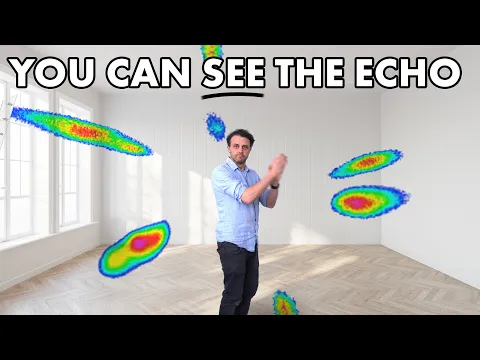
Perhaps an acoustic camera was used in conjunction with a remote firing system that utilized a spatial sound field represented as a visual field displaying LIVE sound sources.
In most industrial applications the operator uses microphones to detect LIVE sound.
I surmise the possibility that an acoustic camera was used, but instead of the acoustic camera using a microphone to detect sound, it may have used a BLUETOOTH or wireless connection directly from Charlie's earpiece transmitter.
Such a foolproof targeting arrangement would guarantee the kind of ZERO-FAIL mission requirements for a one and done, ZERO-FAIL operation.
Acoustic cameras can SEE sound
Refining the Sound Field – Building the "Cage" for Reflections (Phase 2)

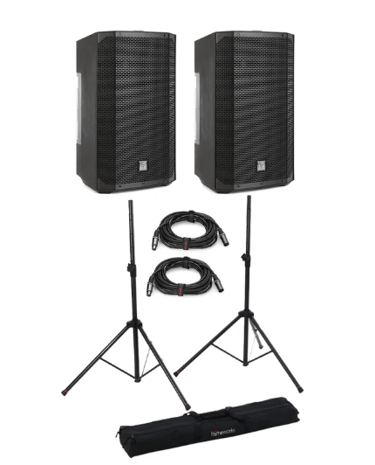
Charlie Kirk Electrovoice P.A. system
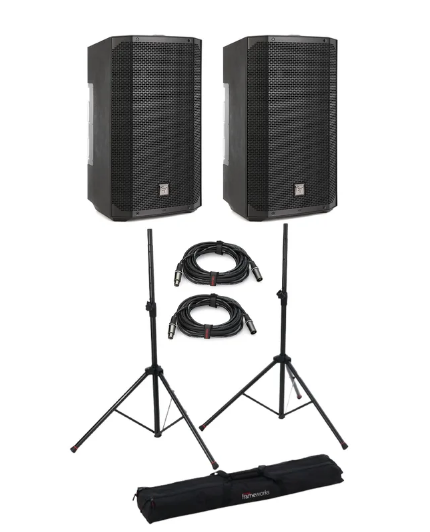
Electro-Voice Everse 12 - (Black)
12-inch 2-way Battery-powered PA Speakers with Stands and Cables
Technical Specs
Type:Battery-powered PA Speaker
Speaker Drivers:1 x 12" woofer, 1 x 1" compression driver
Inputs:2 x XLR/TRS combo, 1 x 3.5mm stereo, 1 x TRS Footswitch
Outputs:1 x XLR
Bluetooth:Yes
Total Power:400W Peak
Frequency Response:55Hz-20khz (±3 db)
Maximum Peak SPL:126dB SPL
Horizontal Coverage Angle:100°
Vertical Coverage Angle:60°
Enclosure Material:Polypropylene
Mounting Options:Pole, Floor
Battery-powered:Yes, 12 hour run time
Power Source:12V DC Power Output
Height:23.5"
Width:13.58"
Depth:13.66"
Weight:31.22 lbs.
Manufacturer Part Number:F.01U.409.013
Unraveling the Mystery of the Charlie Kirk Assassination
info@charliekirktruth.blog
© 2026. CharlieKirkTruth.Blog - All rights reserved.